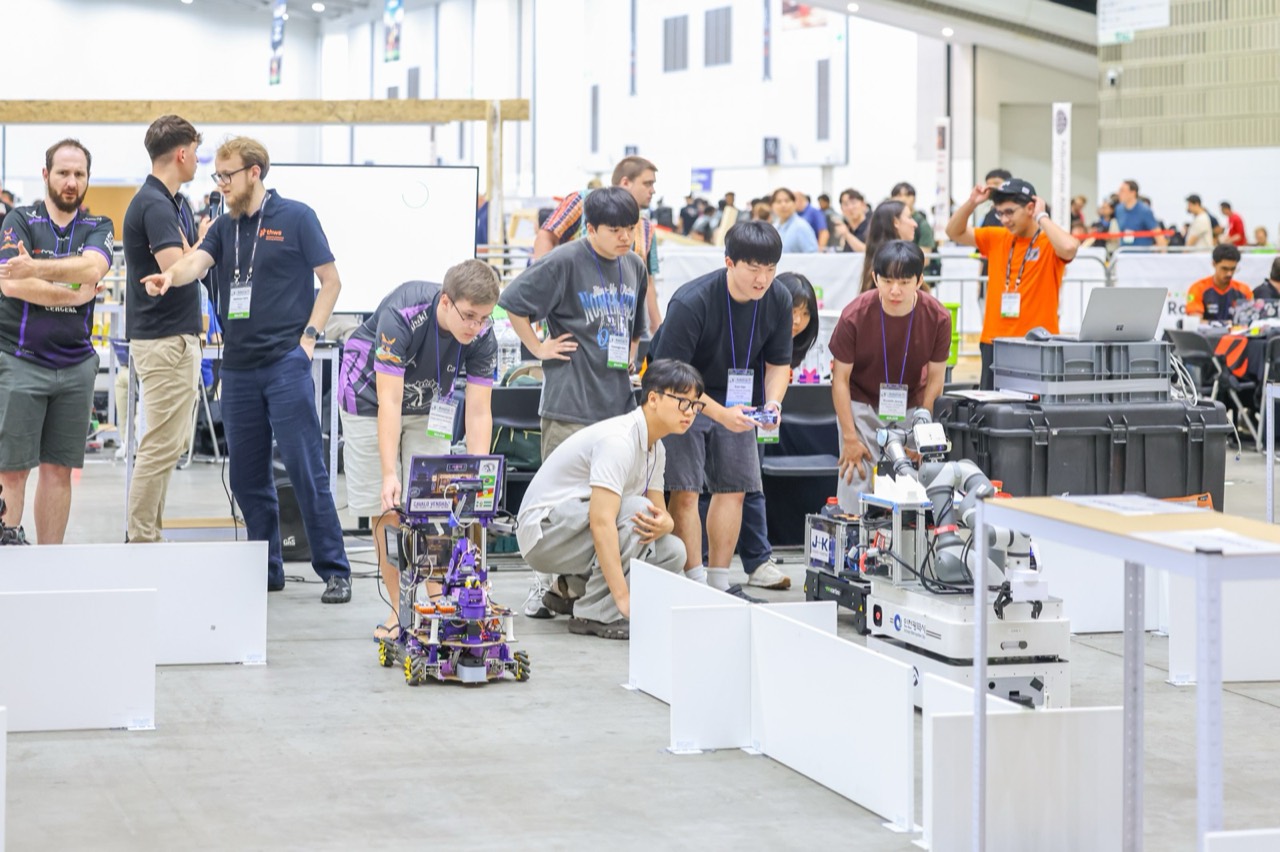
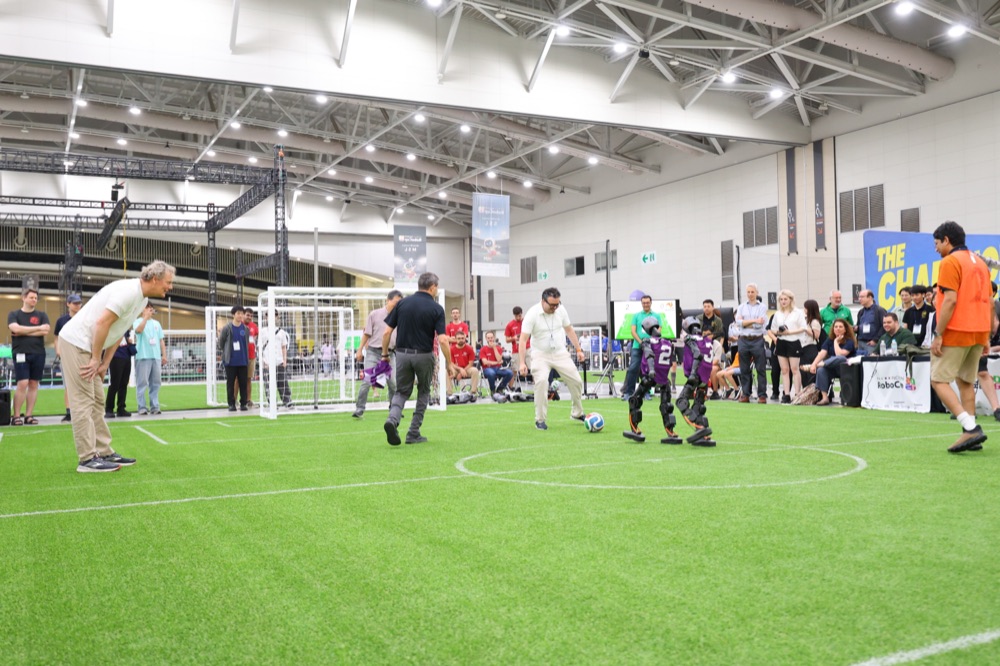
No joysticks. No remote control. Just robots that think for themselves.
RoboCup is the world's largest competition for robots that think for themselves — and its goal is audacious: by 2050, a team of fully autonomous humanoids that beats the human World Cup champions. 22 humanoid robots played the first-ever 11-a-side match — just this July.
Scroll — see what that means
The 30-second answer
The 30-second answer — what RoboCup is
Imagine the World Cup — but every player is a robot, and no human is telling it what to do.
Since 1997, thousands of engineers, researchers and students have gathered once a year to make robots play soccer, rescue people from disasters, and help out at home — entirely on their own. It is part sport, part one of the hardest open problems in AI. The robots see the world, decide, and act by themselves. Here's the thing that trips everyone up:
"Are they remote-controlled?"
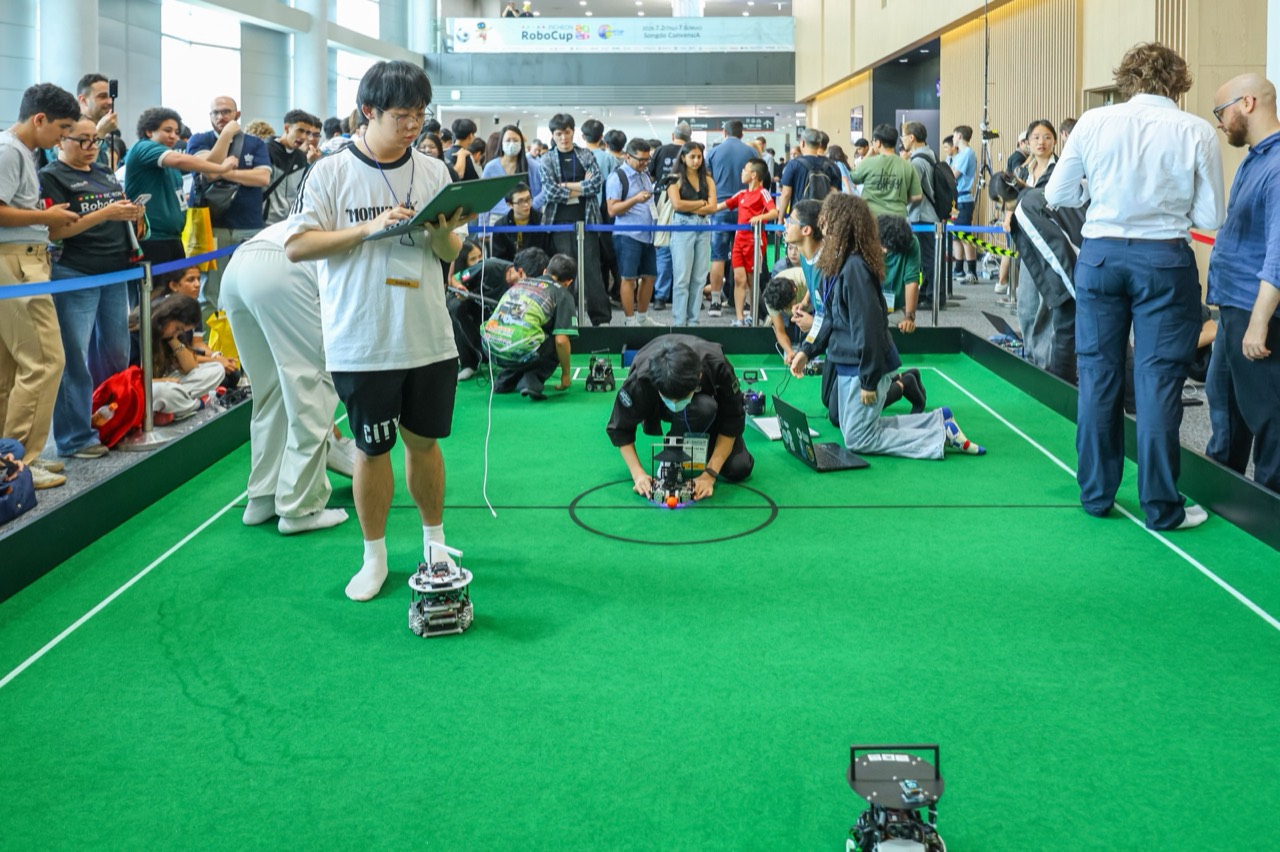
No. In the soccer leagues, there is no operator, no joystick, no one steering from off-screen. The robots read the game and choose their next move in real time — no human in the loop. The only human input allowed is the referee's whistle.
The scale
Bigger than you'd think — and run entirely by volunteers.
50,000+
students use RoboCupJunior in classrooms each year (my estimate — I'm RoboCupJunior's representative on the Board of Trustees)
1997
the year it started — a standard challenge for robotics & AI, held every year since
~45
countries meet at the World Championship, across six continents
100%
volunteer-run — researchers, teachers and students organize all of it, unpaid
Classroom reach and world-championship head-counts measure different things — kept separate on purpose.
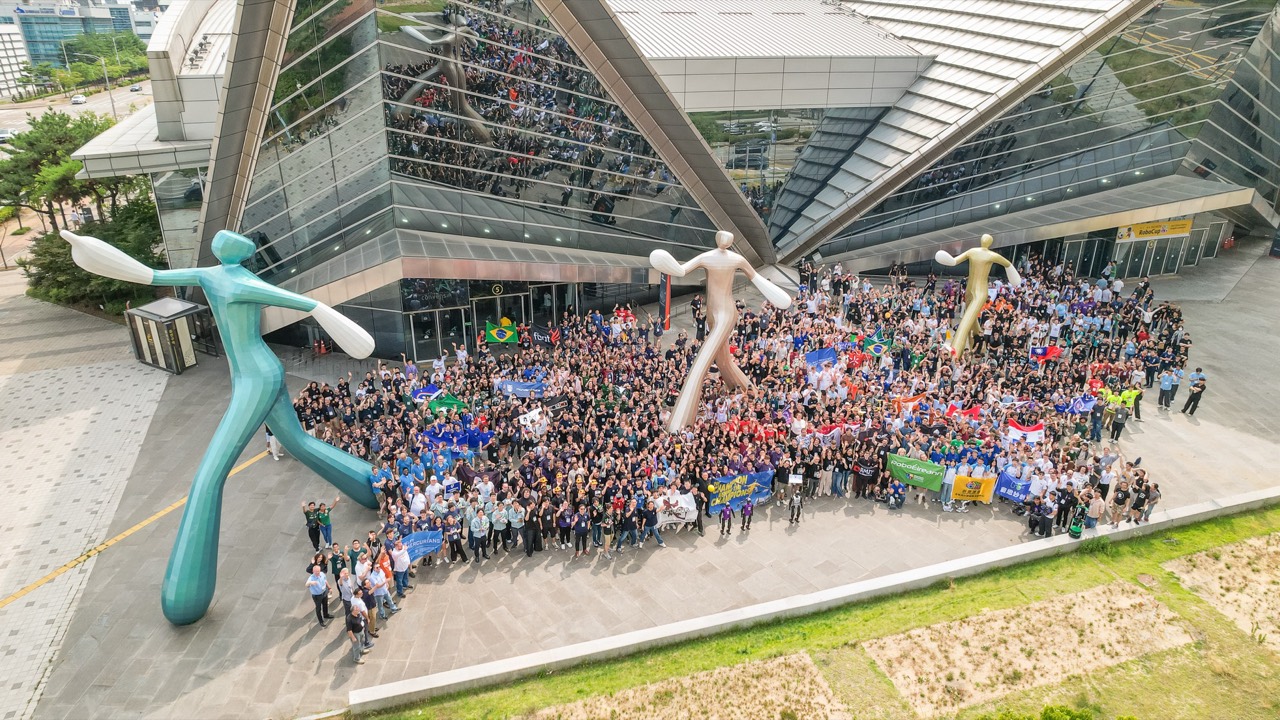
The latest edition — RoboCup 2026 · Incheon, South Korea 🇰🇷
2,330participants
325teams
43countries
6continents
Every team at RoboCup 2026 · Incheon, South Korea
And it comes to a different corner of the world every year.
A new city hosts the World Championship each summer — Japan to Brazil, Mexico to South Korea.
1997 Nagoya, Japan 🇯🇵1998 Paris, France 🇫🇷1999 Stockholm, Sweden 🇸🇪2000 Melbourne, Australia 🇦🇺2001 Seattle, USA 🇺🇸2002 Fukuoka, Japan 🇯🇵2003 Padua, Italy 🇮🇹2004 Lisbon, Portugal 🇵🇹2005 Osaka, Japan 🇯🇵2006 Bremen, Germany 🇩🇪2007 Atlanta, USA 🇺🇸2008 Suzhou, China 🇨🇳2009 Graz, Austria 🇦🇹↖ I joined here2010 Singapore 🇸🇬2011 Istanbul, Türkiye 🇹🇷2012 Mexico City, Mexico 🇲🇽2013 Eindhoven, Netherlands 🇳🇱2014 João Pessoa, Brazil 🇧🇷2015 Hefei, China 🇨🇳2016 Leipzig, Germany 🇩🇪2017 Nagoya, Japan 🇯🇵2018 Montréal, Canada 🇨🇦2019 Sydney, Australia 🇦🇺2021 Online, worldwide 🌐2022 Bangkok, Thailand 🇹🇭2023 Bordeaux, France 🇫🇷2024 Eindhoven, Netherlands 🇳🇱2025 Salvador, Brazil 🇧🇷2026 Incheon, South Korea 🇰🇷
The moonshot
Why do all this? One line, set in 1997.
By 2050, a team of fully autonomous humanoid robots shall beat the winners of the most recent human World Cup — playing by FIFA's own rules.
— The official RoboCup grand challenge
In 1997, RoboCup was set out in AI Magazine as the "standard problem" meant to succeed chess as AI's grand challenge — launched the same year Deep Blue beat the world chess champion. Why a 50-year horizon? The founders' own yardstick: it was about 50 years from the first digital computer to that Deep Blue moment — and, within one lifetime, flight went from the Wright brothers to a man on the Moon.
We're roughly at the midpoint — and honest about it. The 2026 robots are small, wobbly, and a world away from Messi. The milestone isn't perfection; it's that 22 humanoids finally played a full match, on their own, at all.
The goal is set: beat the human champions by 2050.
2002
The Humanoid League begins — robots learning to stand, balance, and kick.
2005 – 2014
Team sizes grow: 2-a-side, then 3, then 4.
2026
The first 11-vs-11 humanoid match. 22 autonomous robots, one full game.
2027
The competition consolidates — the wheeled & simulated leagues fold their science into humanoid soccer.
2050
A team that can beat the World Cup champions.
A volunteer-run nonprofit federation — founded in 1997 by Minoru Asada, Hiroaki Kitano and Manuela Veloso — Veloso went on to found J.P. Morgan's AI Research — and led today by president Ubbo Visser and president-elect Pedro Lima.
What actually happens
It isn't one contest — it's a league for every frontier of autonomy.
That one goal is too big to attack head-on, so it was broken into leagues — each taking a different slice of the same hard problem. Click any domain to open its leagues and see which piece of 2050 it chips away at.
RoboCupSoccerThe flagshipRobots playing real soccer — the road that leads straight to the 2050 goal.4 leagues · click to explore
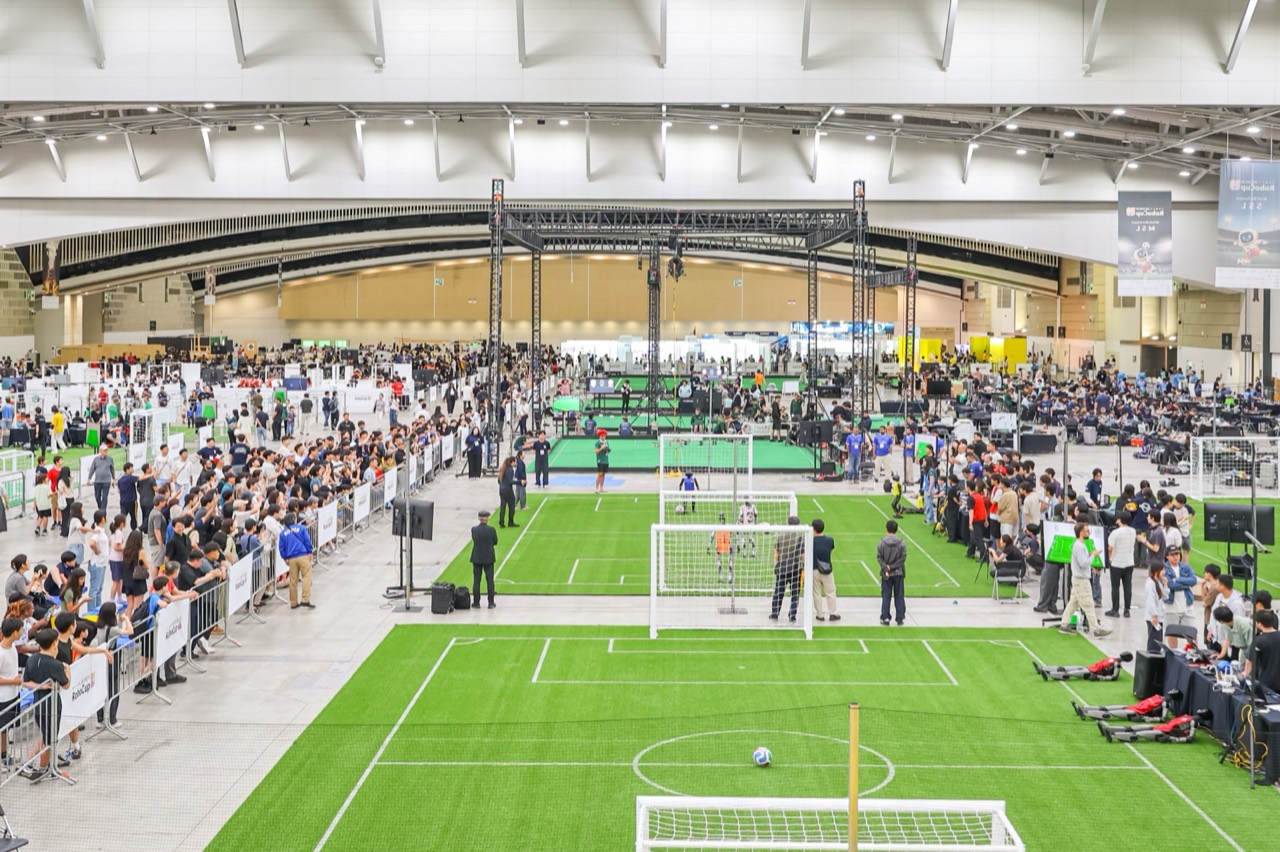
Humanoid Soccer LeagueDrives 2050
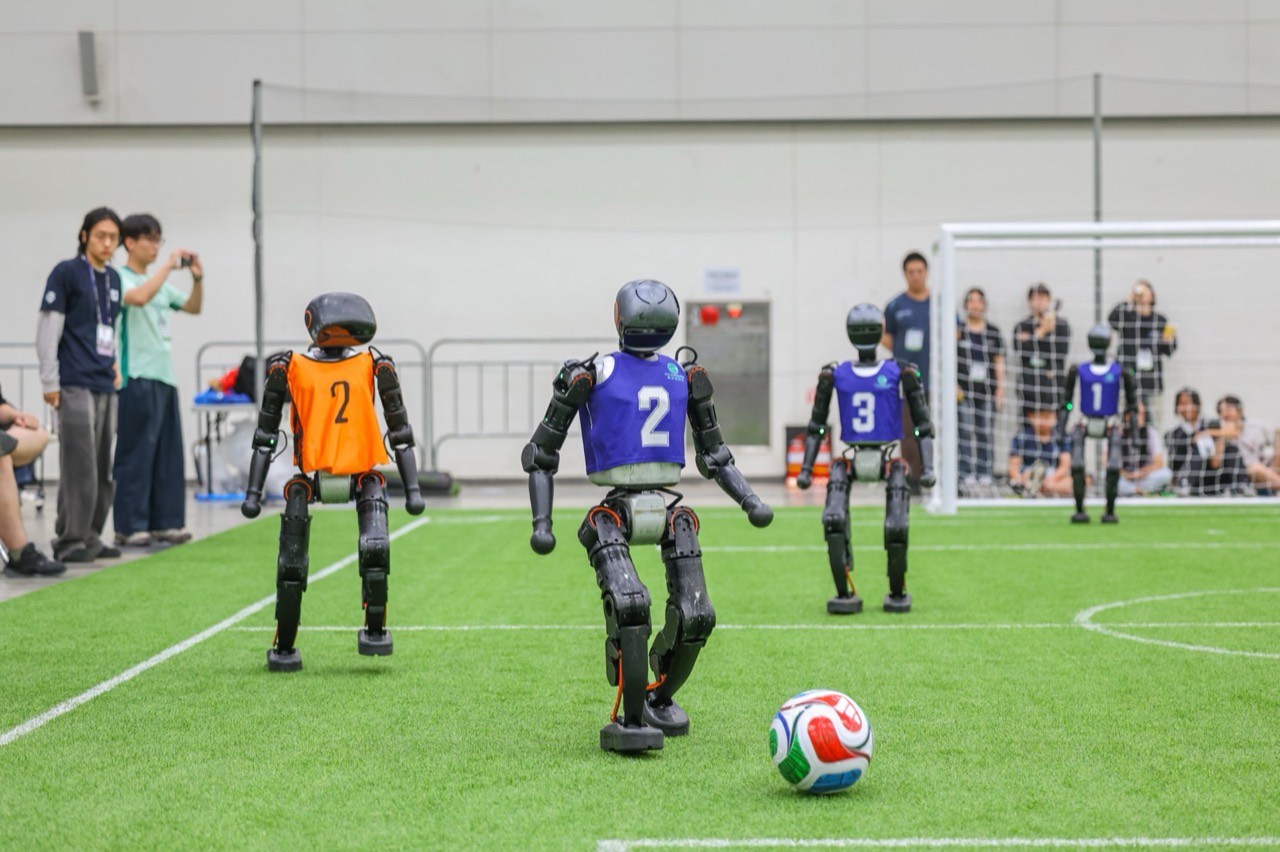
Bipedal robots in three size divisions chase a real ball, fall, and pick themselves back up — no human touching a thing.
Goal
Win autonomous humanoid soccer under FIFA-style rules.
→ 2050
This is the 2050 challenge in miniature — the only league whose format is the goal itself.
Wow
July 2026 saw the first-ever 11-vs-11 humanoid match (B-Human 4–0 HTWK) — its motions trained by deep reinforcement learning, not hand-coded. It was an exhibition, on a pitch scaled for 95-cm robots.
Small Size LeagueLegacy · ends 2027
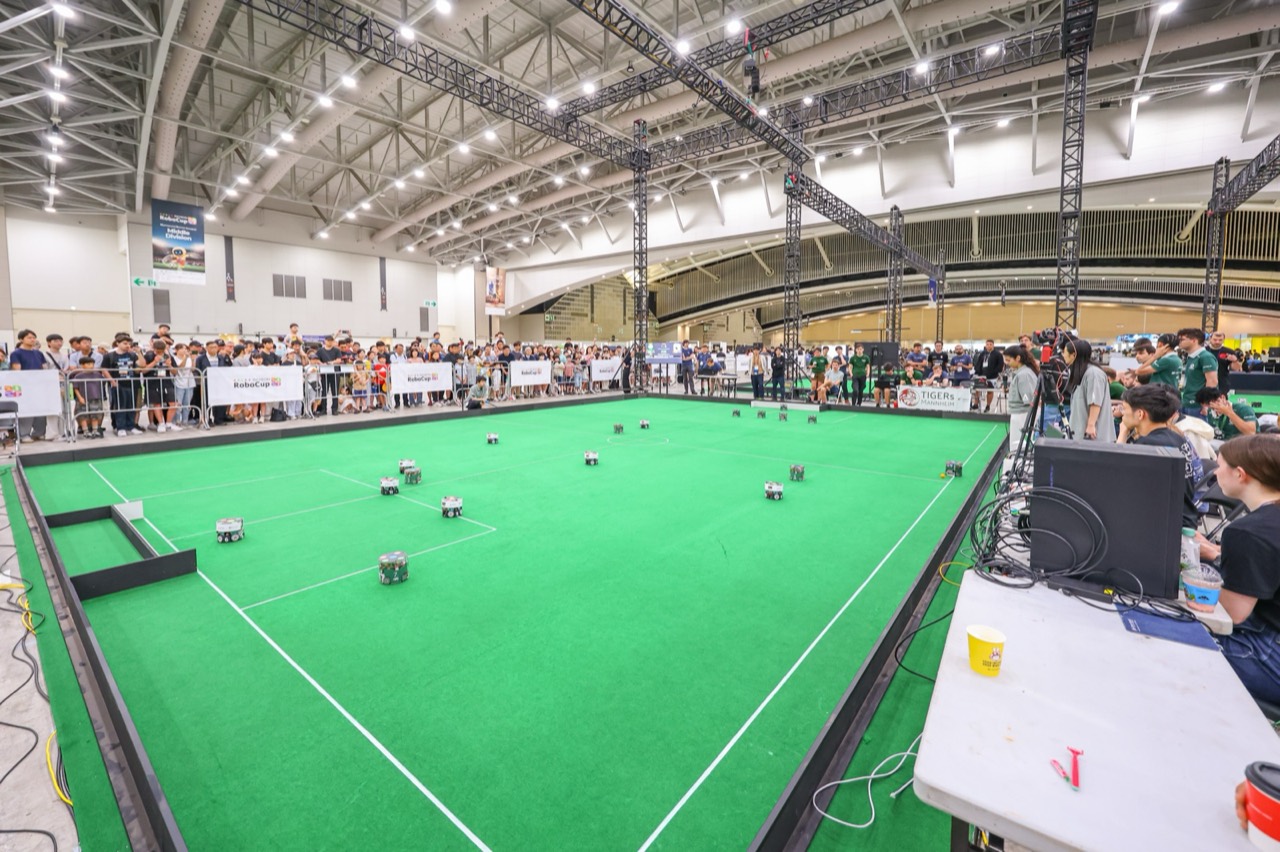
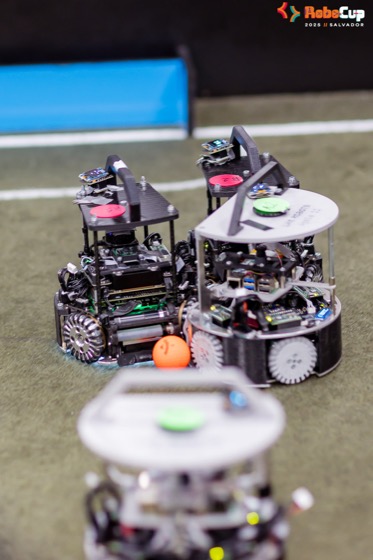
Puck-sized wheeled robots guided by an overhead camera and an off-field 'brain,' moving faster than any human could react.
Goal
Coordinate a team of up to 11 robots (in the top division) with centralized vision and off-board planning.
→ 2050
It effectively solved high-speed multi-robot coordination — tactics that transfer to humanoids as they get faster.
Wow
The multi-robot coordination pioneered here didn't stay on the pitch — the architect of a four-time Small Size champion went on to co-found Kiva Systems, bought by Amazon for $775M in 2012 and now the backbone of Amazon Robotics.
Middle Size LeagueLegacy · ends 2027
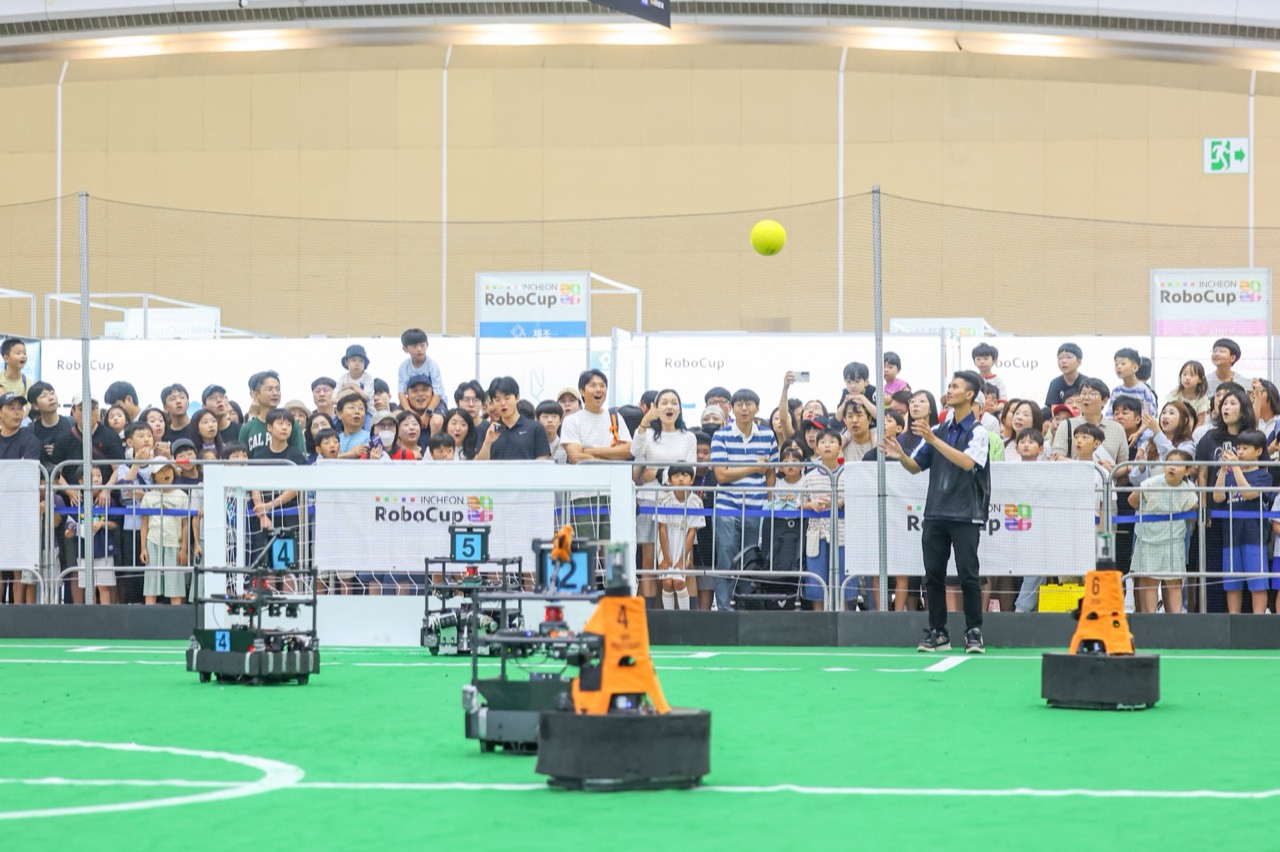
Five knee-high robots control a regulation FIFA ball with only onboard sensors, on a 22×14 m pitch.
Goal
Outscore the opponent — and a pass is mandatory before a goal counts.
→ 2050
Self-described 'shortest route to FIFA-compliant robot soccer'; its passing and cooperation feed humanoid team tactics.
Wow
For years the tournament ended with the robot champion taking on a team of humans — the man-vs-machine tradition that's now evolving into humans vs humanoids.
Soccer Simulation (2D & 3D)Legacy · ends 2027
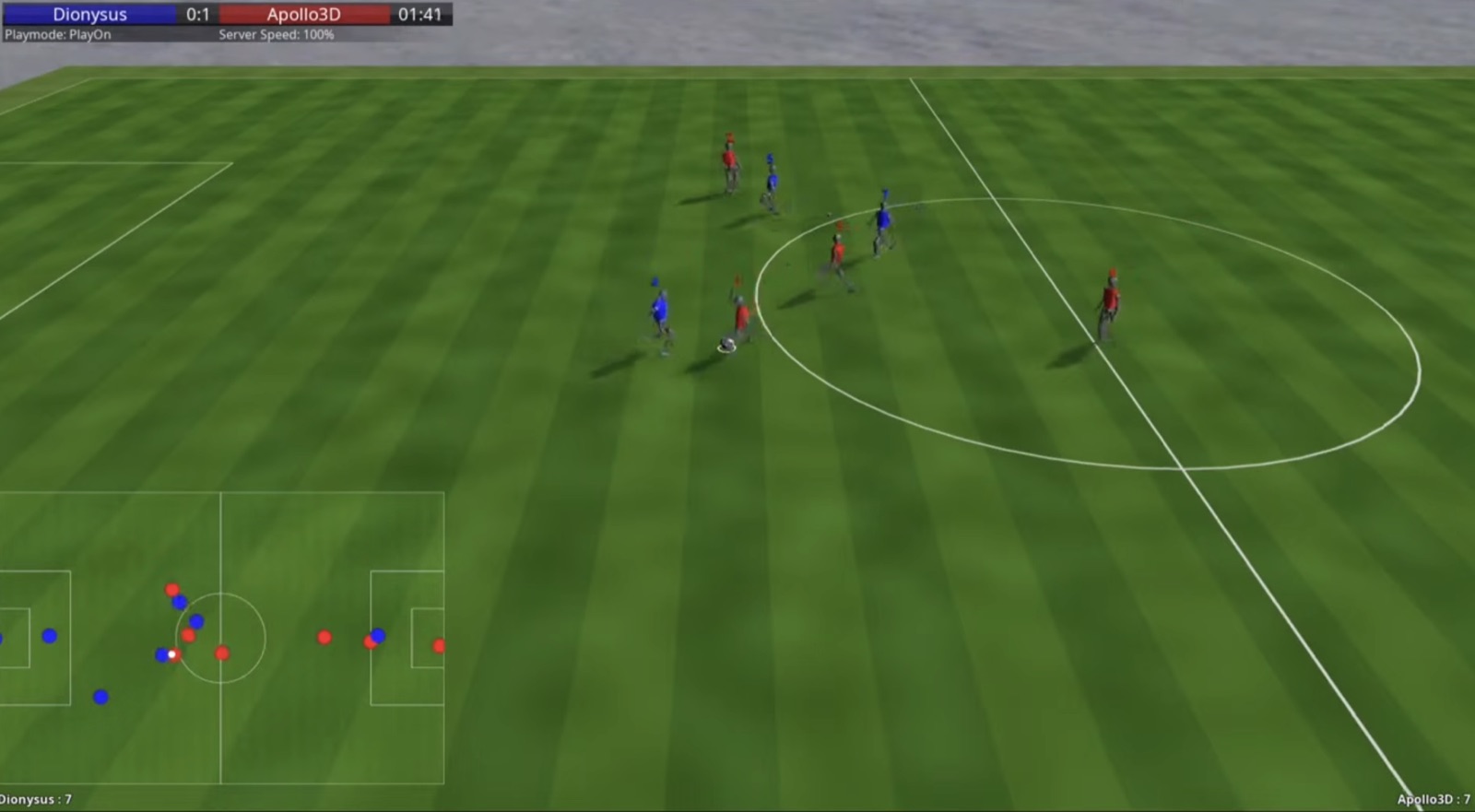
No hardware at all — pure AI agents (2D circles or 3D humanoid avatars) play in real time.
Goal
Win in simulation with software agents alone.
→ 2050
The cheap testbed where multi-agent learning is prototyped before it ever touches real humanoids.
Wow
The 'grandmother of all RoboCup leagues' — its Soccer Server dates to 1994, and the 2D sim was deliberately frozen 2003–2008 so scientific progress could be measured year over year.
RoboCupRescueReal-worldRobots that go where humans can't — into the rubble after a disaster.1 league · click to explore
Rescue Robot League
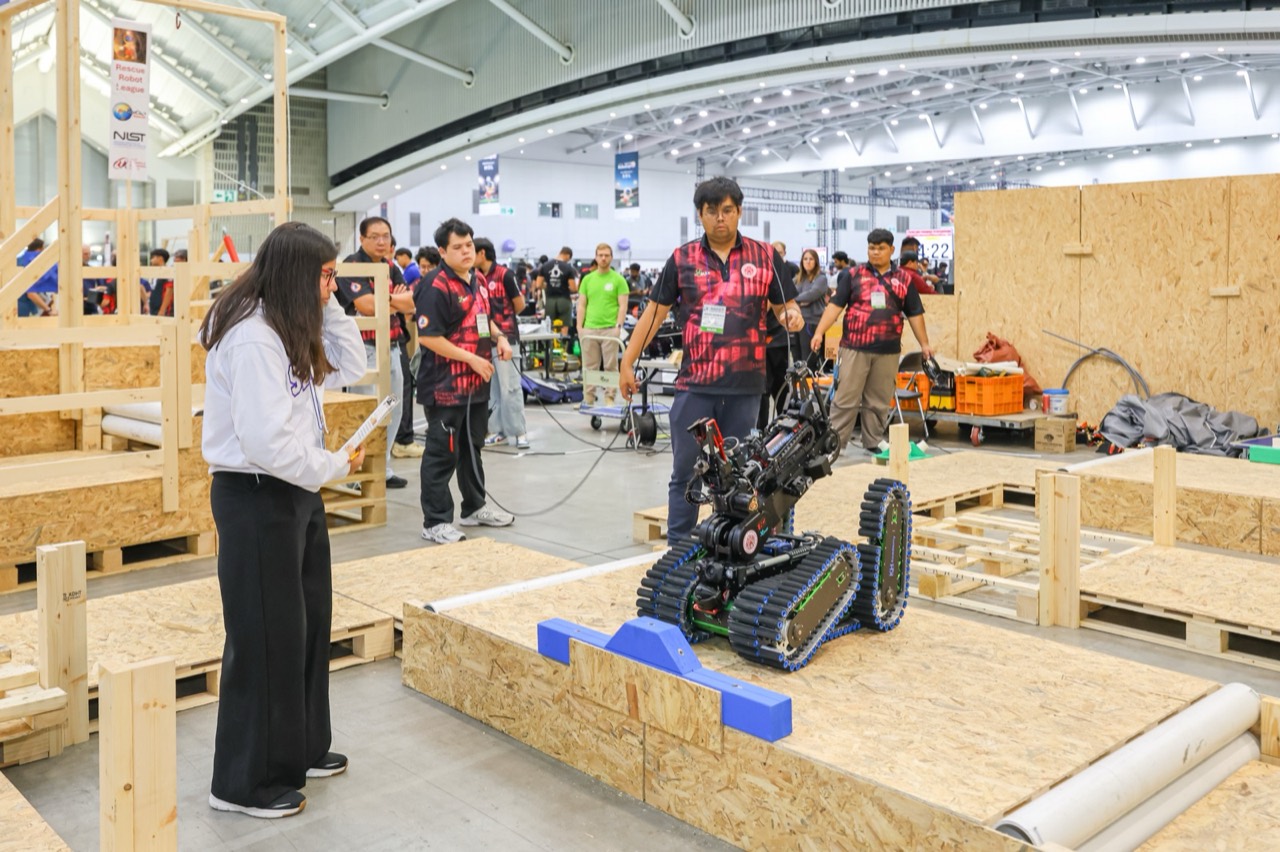
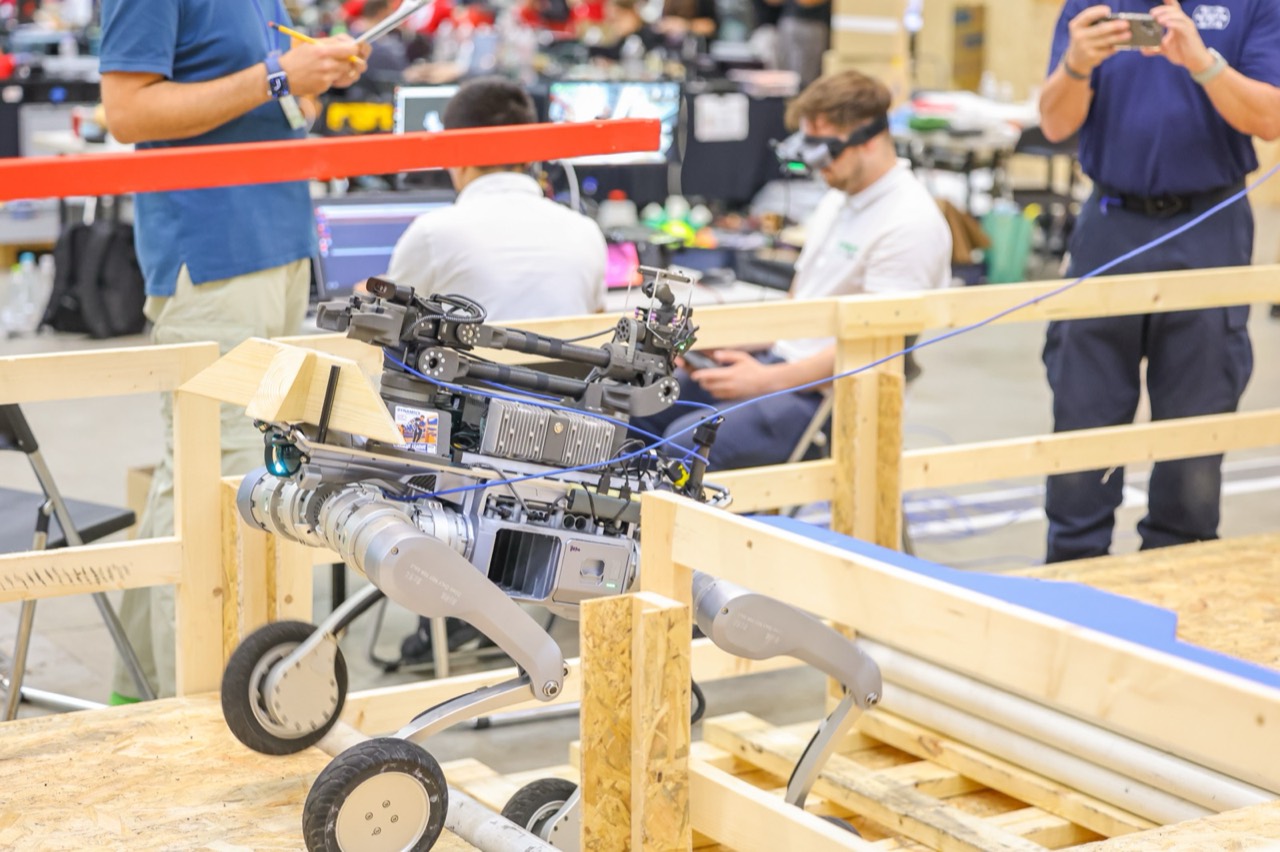
A tracked robot claws over rubble inside a mock collapsed building, hunting the heat and motion signatures of victims.
Goal
Find victims, map the site, and report hazards — autonomy earns up to 8× the points.
→ 2050
Where autonomous mobility, manipulation and mapping get stress-tested in the messy, non-soccer world a general-purpose humanoid must handle.
Wow
Not a fully autonomous league — teleoperation is allowed and scored. Yet the impact is real: the NIST-designed arenas here became the ASTM International standards now used to test emergency-response robots — guiding $200M+ in robot purchases by responders and the military — and rescue tech pioneered in the league reached the 2011 Fukushima disaster.
The separate Rescue Simulation league — a virtual city where fire, police and ambulance agents coordinate — was retired from international play after 2025.
RoboCup@HomeEverydayAutonomous robots learning to be genuinely useful in a real home.1 league · click to explore
RoboCup@Home (unified)Merged 2025
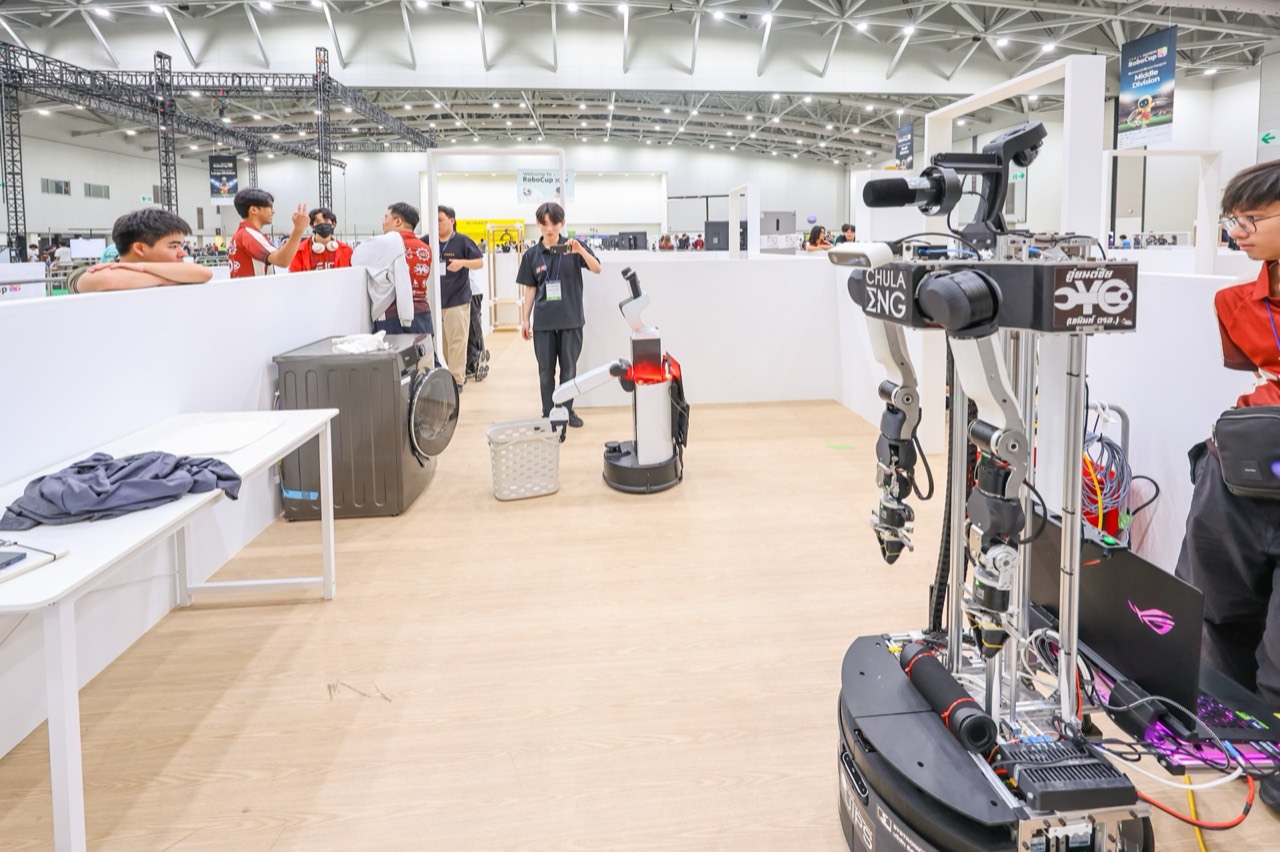
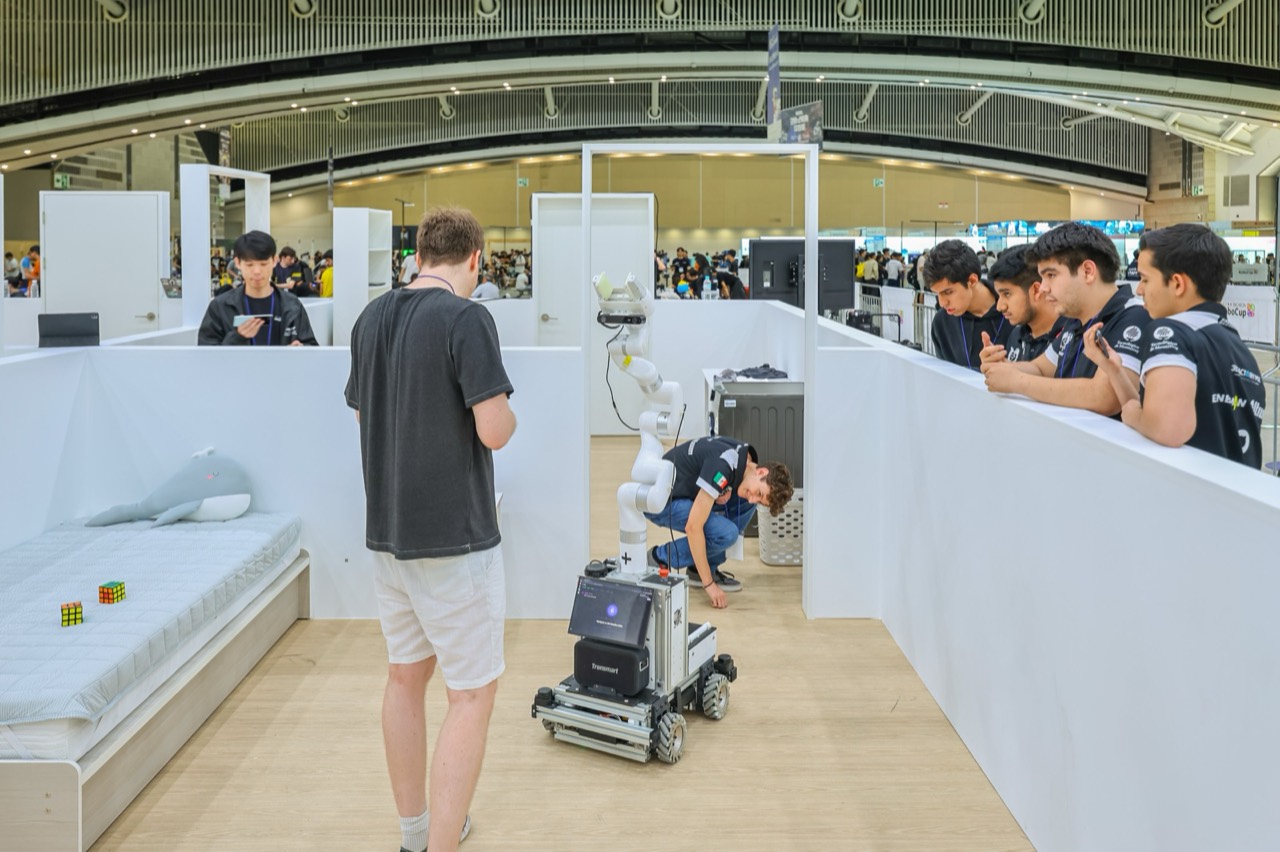
A service robot navigates a furnished apartment, fetches a named object from a cluttered shelf, and hands it over — from a spoken request alone.
Goal
Complete household tasks fully autonomously across changing test rounds.
→ 2050
Where humanoids learn the non-soccer skills — perception, manipulation, natural conversation — that every 2050-era robot will need.
Wow
For years it ran as separate standard-platform tracks — every team on identical robots, so the contest was pure software — then unified into a single open league in 2025.
RoboCupIndustrialIndustry 4.0The 'factory of the future,' built and tested by autonomous robots.1 league · click to explore
Smart Manufacturing LeagueMerged 2026
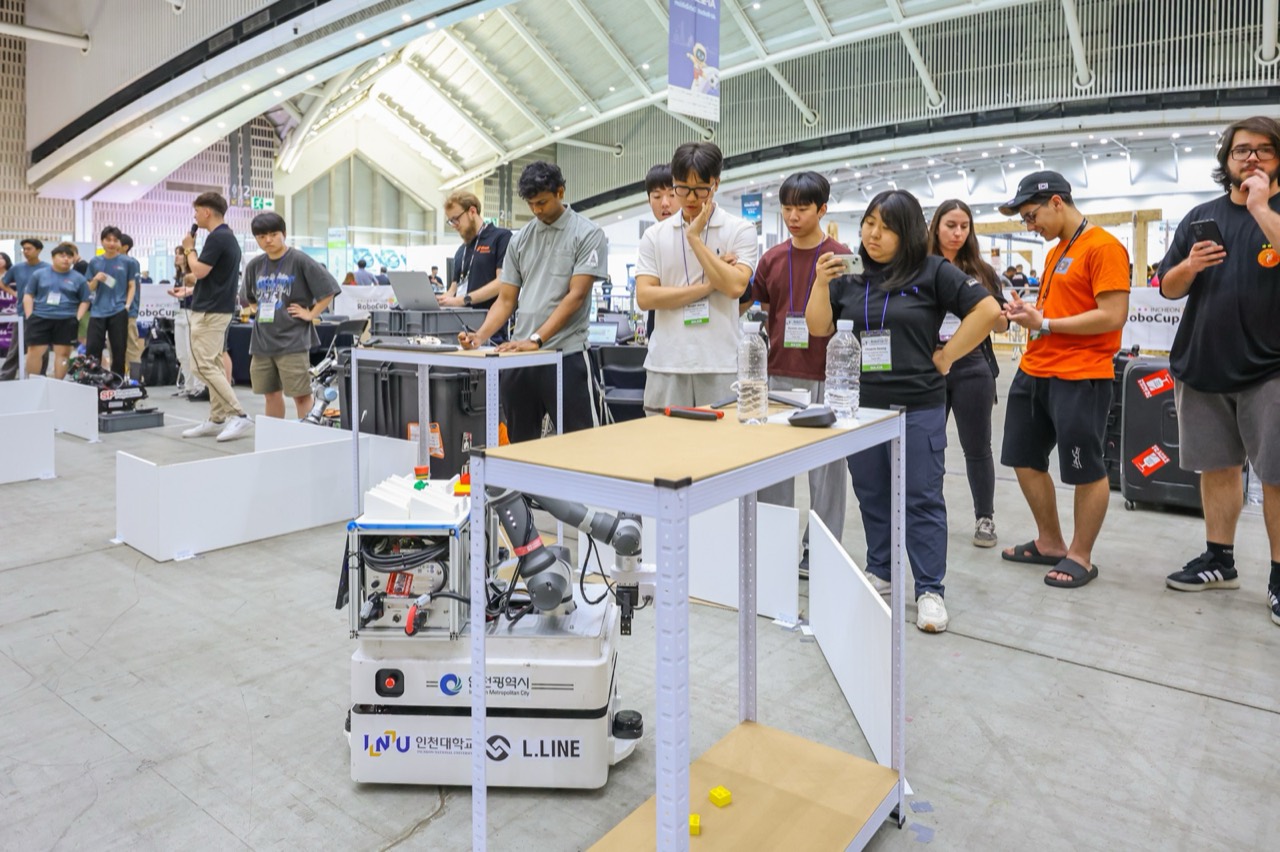
Mobile robots wheel between machines and shelves, picking parts and filling changing customer orders on a mock factory floor.
Goal
Run a flexible factory — planning, on-demand manufacturing, logistics and recycling.
→ 2050
Autonomous mobile manipulation and multi-robot coordination — the building blocks for humanoids in real industry. The league now welcomes humanoid entrants.
Wow
Formed in 2026 by merging RoboCup@Work (2016) and the Logistics League (2012) into one.
SoccerRescueOnStageRoboCupJunior14–19 at the World ChampionshipWhere the next generation of roboticists actually starts — and where the 2050 bet gets inherited.3 leagues · click to explore
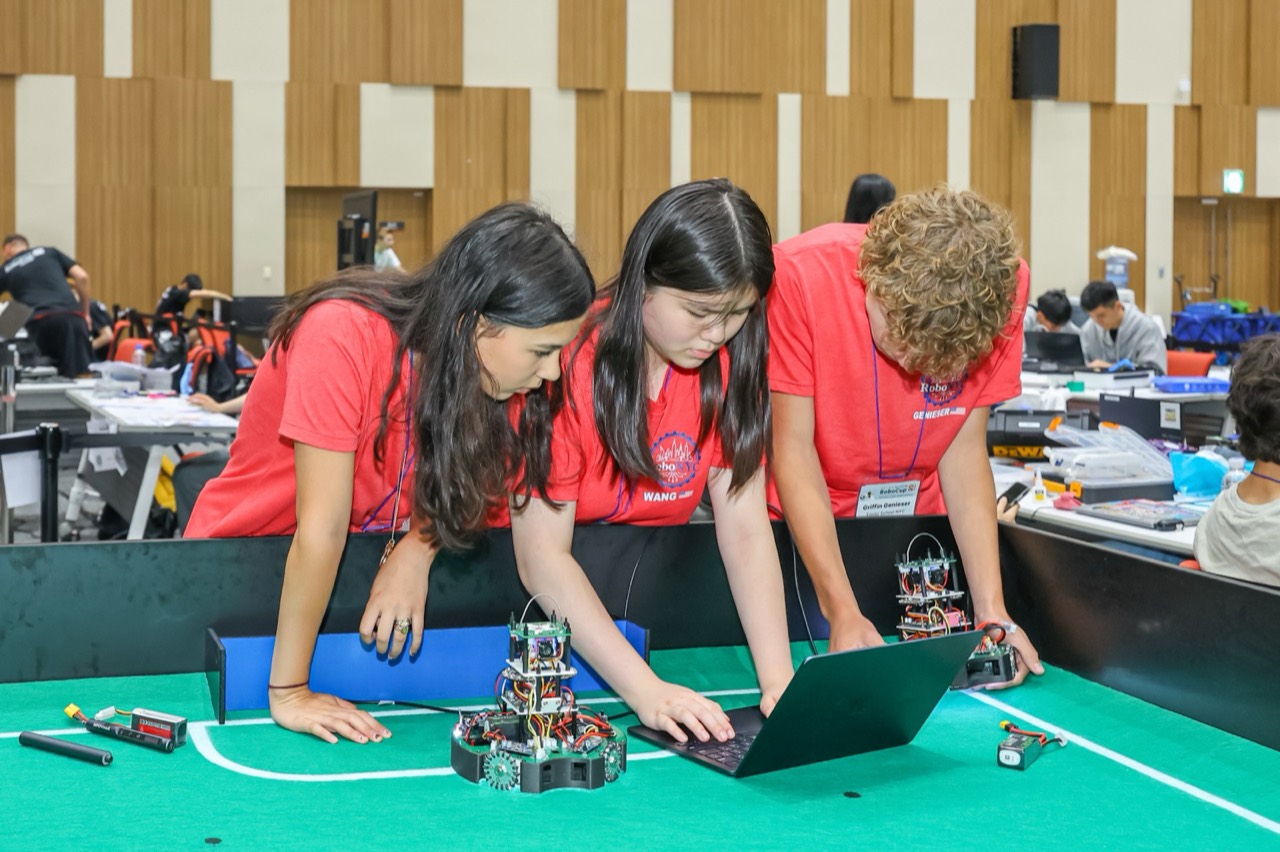
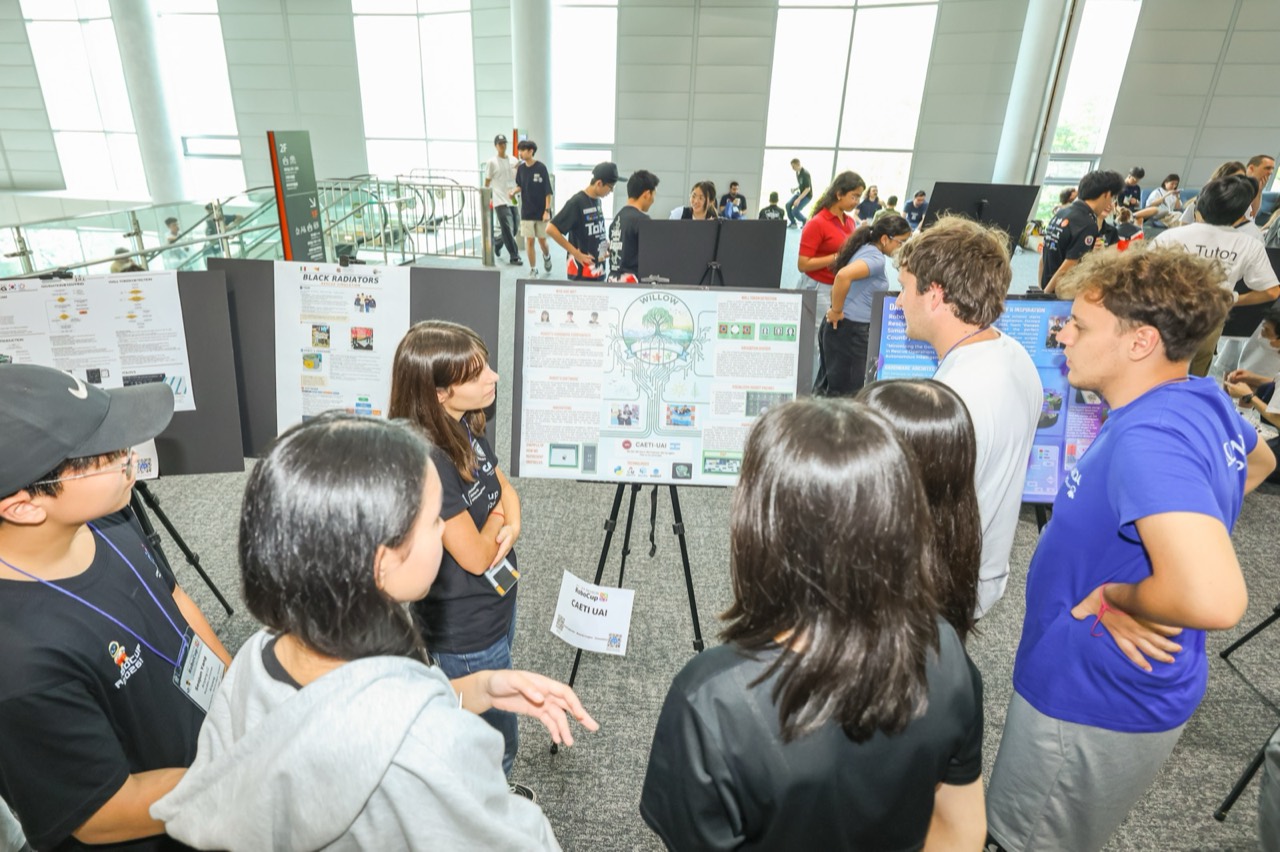
Nobody can hide behind a teammate. Every member holds a defined technical role — mechanical/design, electrical/sensing or software — and has to be able to explain their own part under technical judging — in OnStage that interview is 30% of the score. A robot no one on the team understands does not get far. No kit, brand or programming environment is prescribed, so a school can compete on what it already owns. Ages 14–19 at the World Championship; from age 10 at super-regionals. (During COVID, Junior Soccer even ran fully virtual as 'SoccerSim.')
SoccerThe entry point
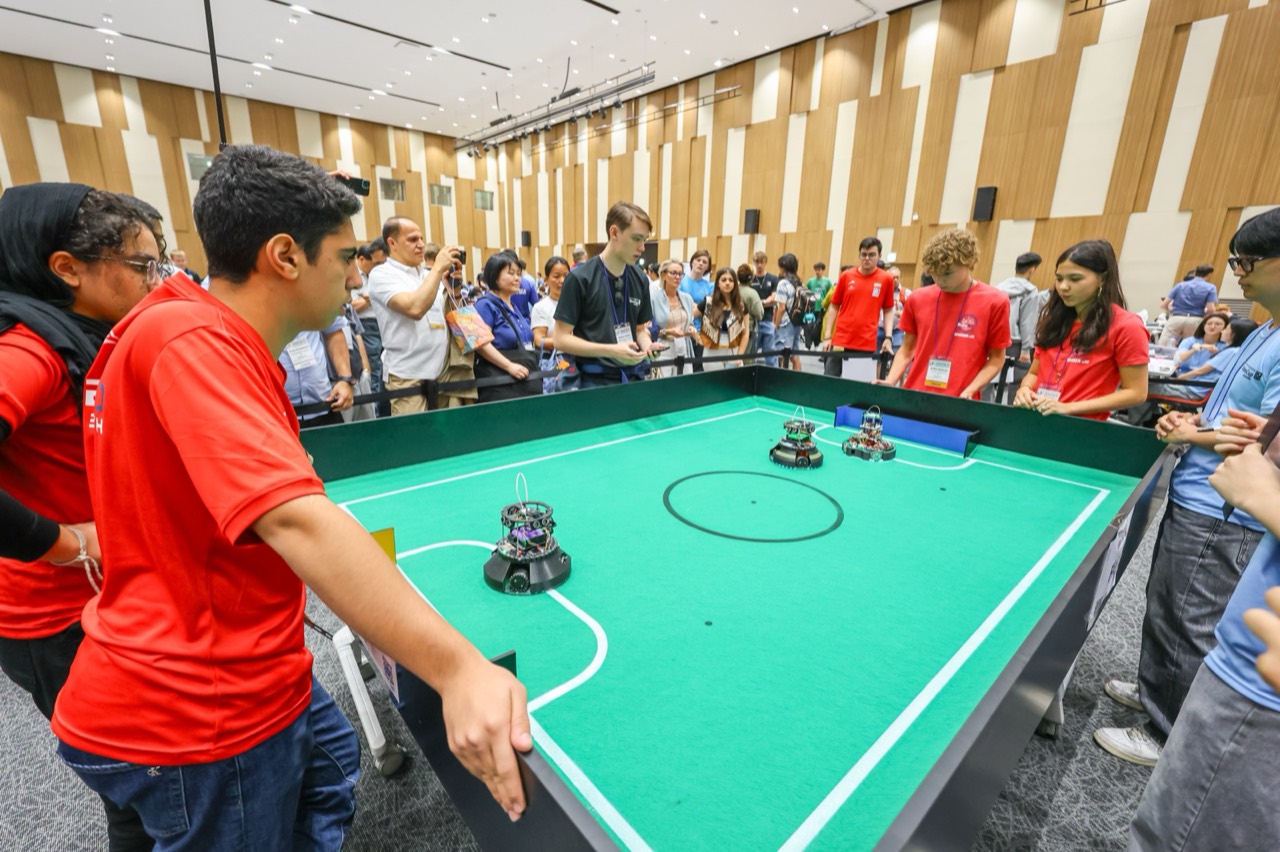
At the World Championship, student-built robots play 2-vs-2 over two 10-minute halves. No driver, no overhead camera, no off-board computer — every robot senses, decides and acts entirely on its own hardware.
Vision 2-vs-2The robot finds the ball with an onboard camera. That is real-time computer vision running on a moving platform, with the game strategy layered on top.
Infrared 2-vs-2The same game solved through a different sense: the ball emits an infrared signal, so the robot works from signal direction and strength instead of pixels. The ball itself is open source — any team can build one.
Entry 1-vs-1One robot a side. Run at regional and super-regional tournaments — not at the World Championship — as the on-ramp before a team steps up to two robots.
Hard part
A soccer field is close to symmetrical, so seeing the ball is not enough — the robot still has to work out which goal is which. Perception, orientation, then a decision to strike or defend, in a game that never pauses, on electronics the students assembled themselves.
Three escalating takes on the same problem: get an autonomous robot through terrain it has never seen and find the victims.
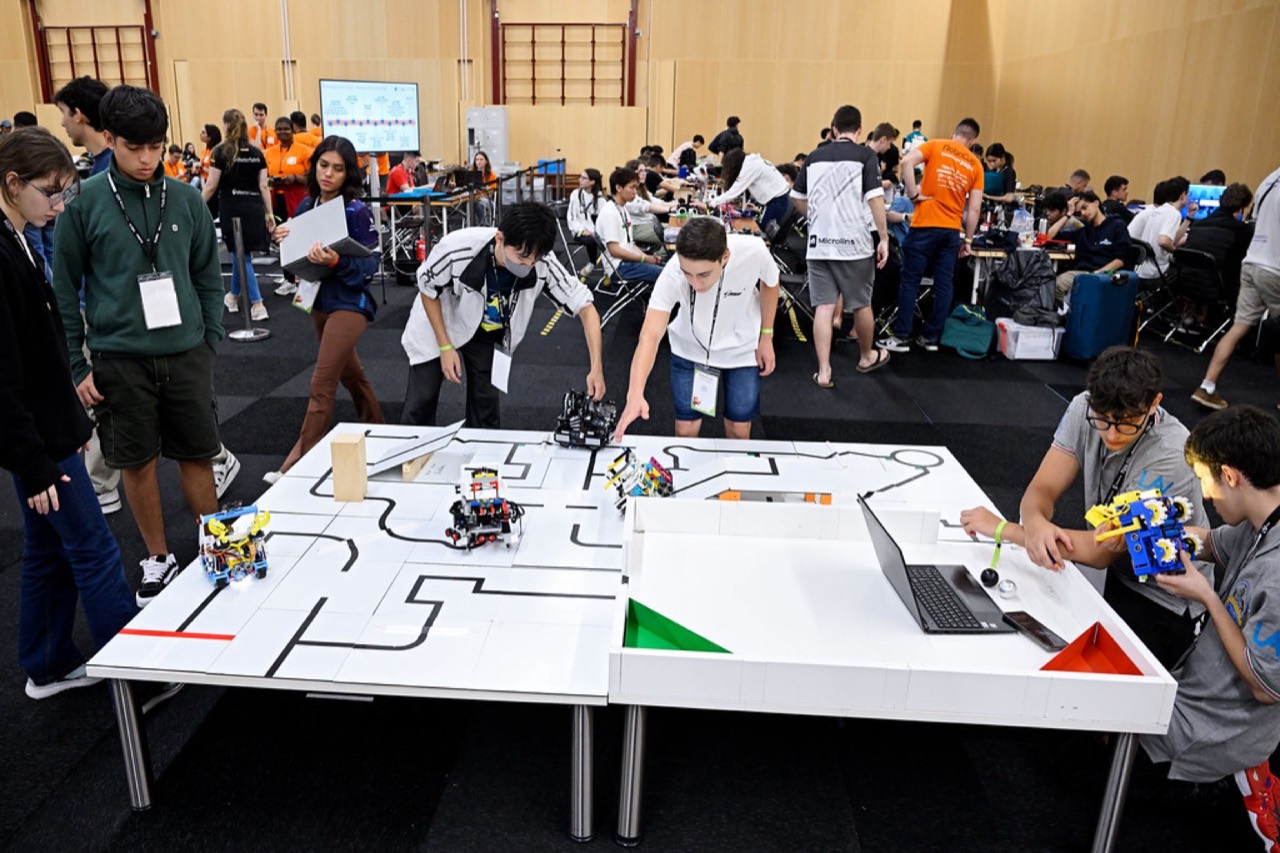
Rescue LineThe robot tracks a line through gaps, ramps, seesaws and debris — then has to pick the victims up and carry them out. That turns a navigation problem into a manipulation one, on objects deliberately weighted to roll unpredictably. The live victims are reflective silver and the dead ones black, so the robot has to classify each sphere before it decides where to deliver it — and rescuing them in the right order multiplies the score.
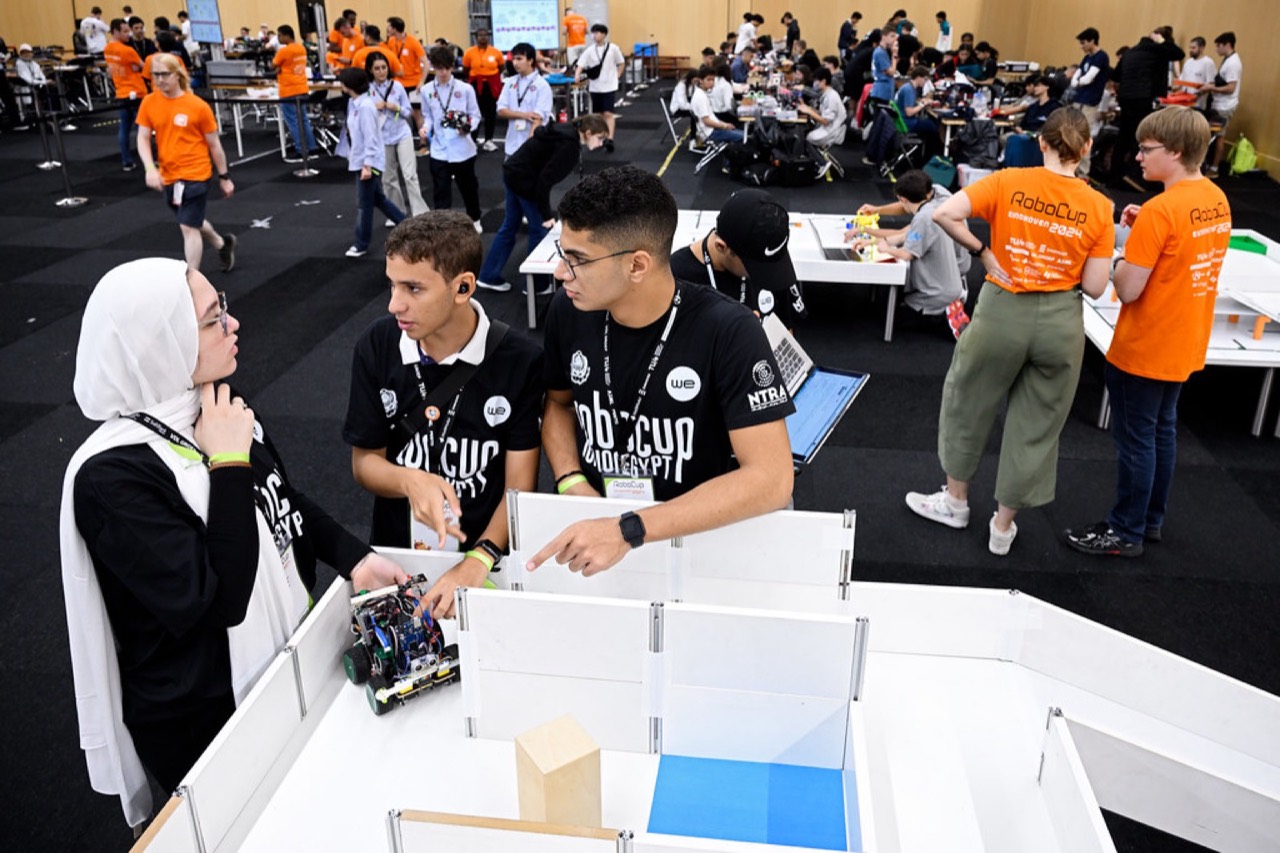
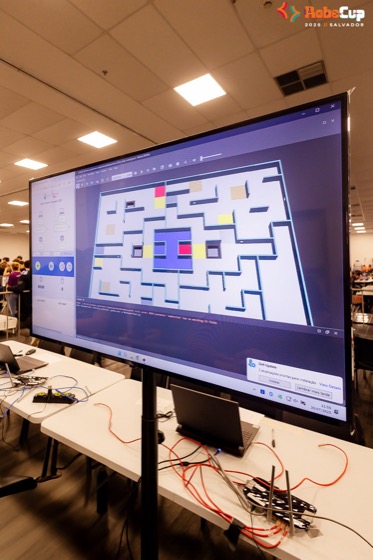
Rescue MazeAn unknown labyrinth, scored on how much of it you explore rather than how fast you get through. The robot reads small markers on the walls to identify victims — computer vision from a moving platform, on symbols that may be rotated or poorly lit — while building a map as it goes — and then finding its way back to the start, because the exit bonus only pays out if it can.
Rescue SimulationThe same mapping problem in Erebus, the league's Webots-based simulator: a virtual robot explores the maze and identifies victims, with no hardware budget standing between a student and the algorithm.
Hard part
The course is unseen until the run begins. Building a map of somewhere you have never been while tracking your own position in it, recognizing what you are looking at, and remembering where you have been — that is mapping, localization and computer vision, the same problem class the Major leagues attack with far bigger budgets.
OnStageWhere the artists come in
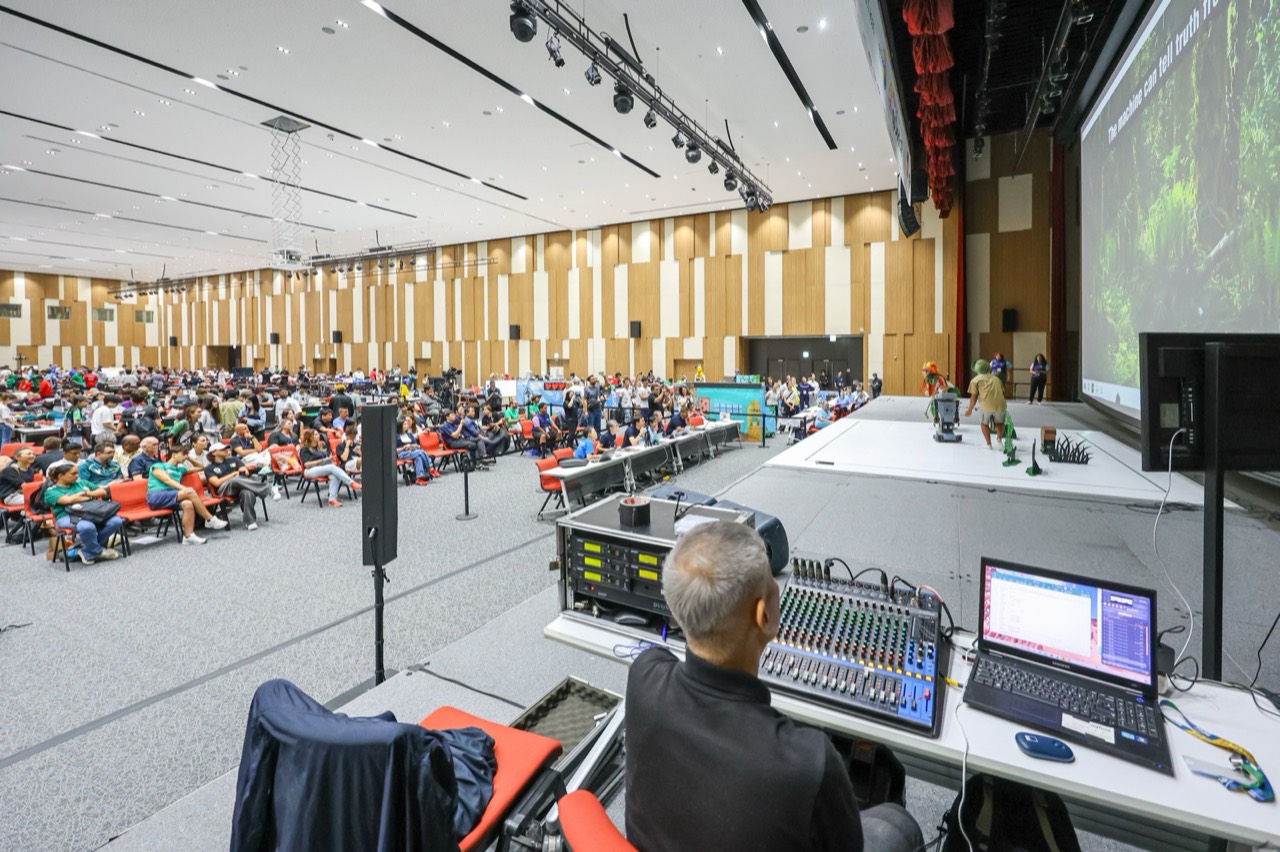
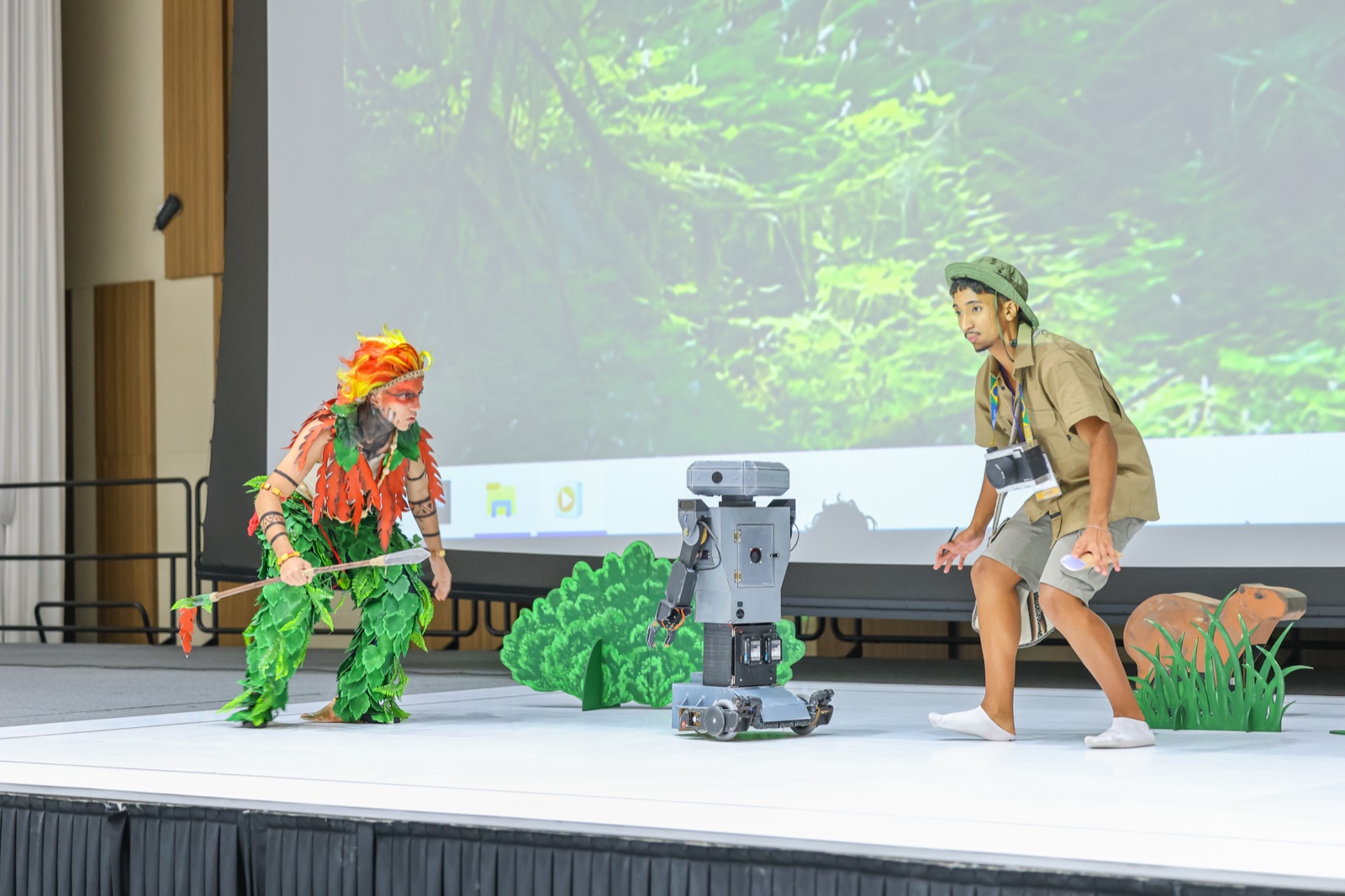
A choreographed robot performance of at least ninety seconds — dance, theater, music, art — judged on creativity as much as on engineering. The autonomy requirement does not relax because it is a stage.
One open divisionDance and Dance Theatre merged in 2015, and sub-leagues were dropped entirely in 2021. Under the current rules, a performance can be a magic show, a theater piece, storytelling, a comedy show or an art installation.
Hard part
Live, in front of judges. A team gets two attempts and can call a restart mid-performance — but a restart resets the score to zero and costs penalty marks, so the whole incentive is to land it first time. Then they sit a technical interview and explain how it actually works.
→ 2050: This is the foundation the rest of the pyramid stands on — Junior Rescue feeds RoboCupRescue, Junior Soccer feeds the humanoid leagues, and the federation is building a smoother bridge between them. It has to: a goal set in 1997 for 2050 will be delivered by the people who are teenagers now. A 14-year-old competing in Incheon this year turns 38 the year the bet comes due.
More than winning
The trophy is the least important thing here.
Strip away the scoreboard and RoboCup is really three things at once — and this is the part that makes it matter.
Research → Symposium
The science, written down.
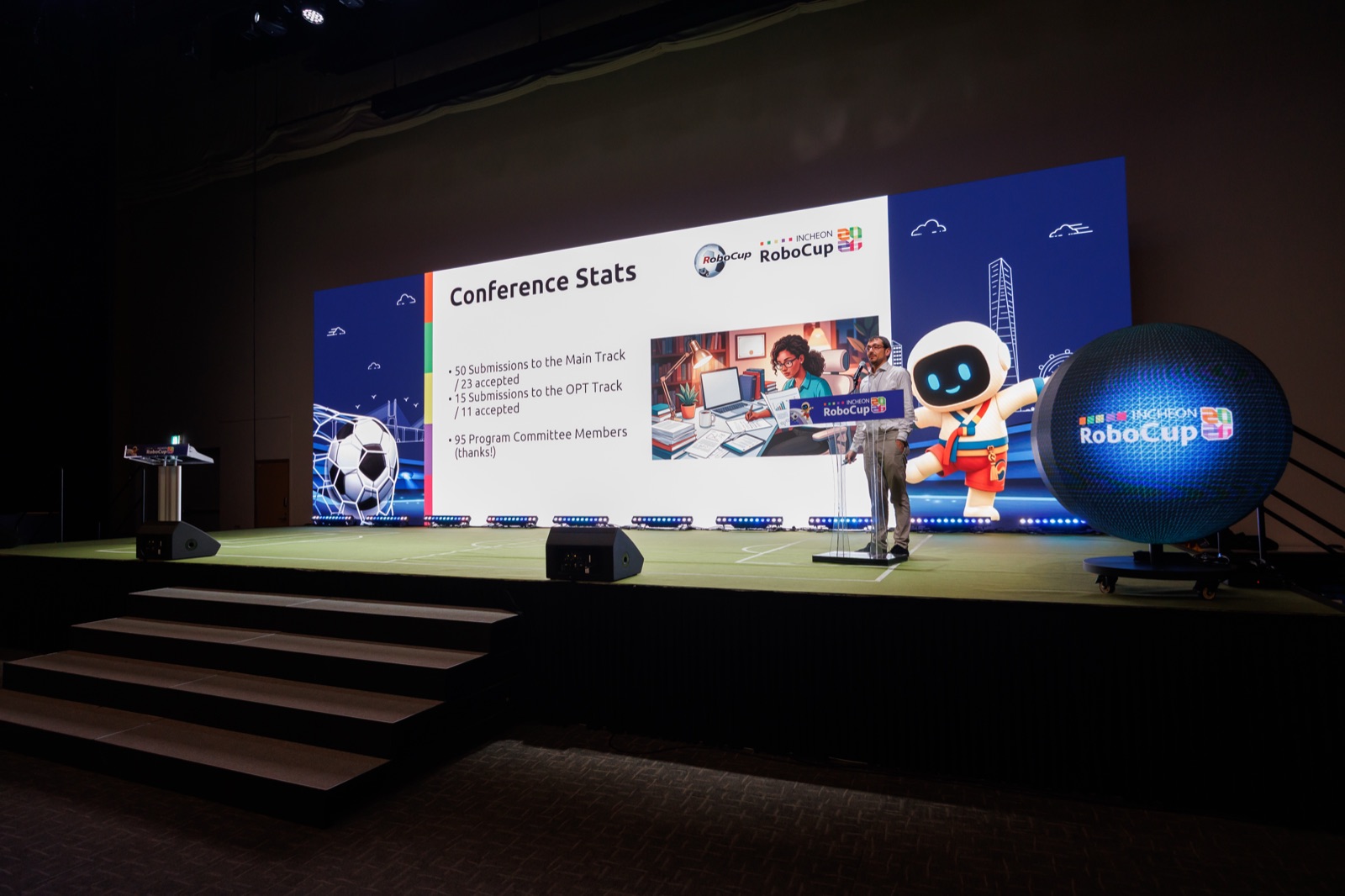
A peer-reviewed scientific conference runs alongside the matches — every year since 1997. The games are the demo; this is where the research gets published and the field moves forward.
Education → WEROB
The teaching side.
A dedicated workshop for how robotics actually reaches a classroom. The competition is the hook; learning is the point — and it's what the whole pyramid is built on.
Collaboration → SuperTeams
Rivals, merged.
Teams from different countries combine into one SuperTeam and solve a challenge together — you help the team you were just playing against. Community over rankings.
Research, education, collaboration. Building the community is the point.
Best moments
Some things you just have to watch.
Two official highlight reels — 2026 and 2024 — then the moments I'd show anyone: a piece of history, our cascarita (a pickup kickabout), RoboCupJunior at 25, the awards I get to lead, and what a championship feels like.
RoboCup 2026 — the official highlights · IncheonRoboCup 2024 highlights · EindhovenThe first 11-vs-11 humanoid match · Incheon 2026Humanoid highlights · Incheon 2026Trustees vs Humanoids — our cascarita (that's me) · 2026The RoboCupJunior awards — the ceremony I lead · 2026RoboCupJunior — 25 years“What RoboCup feels like” — the after-movie
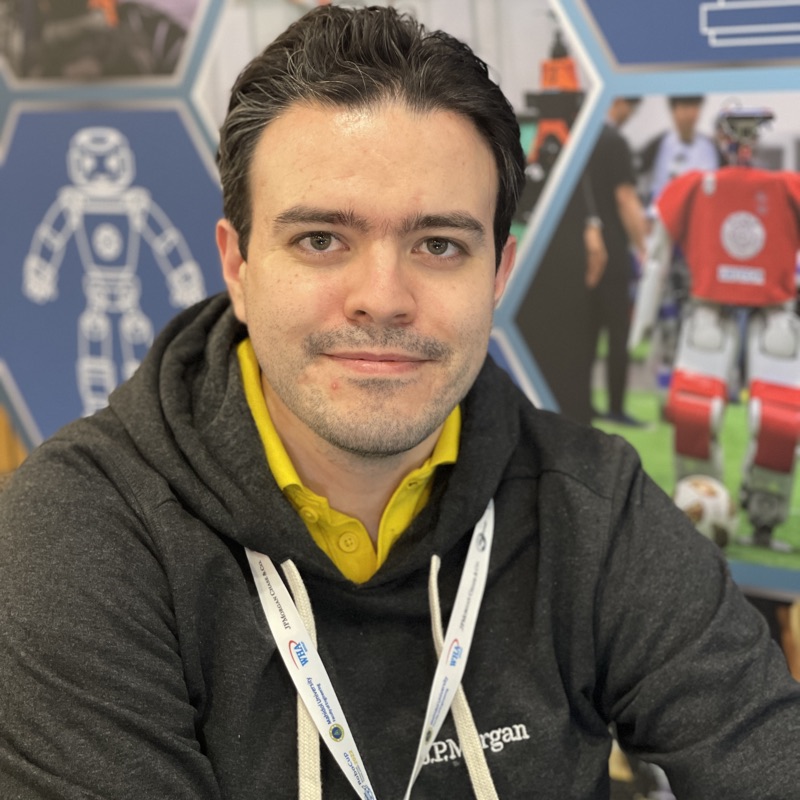
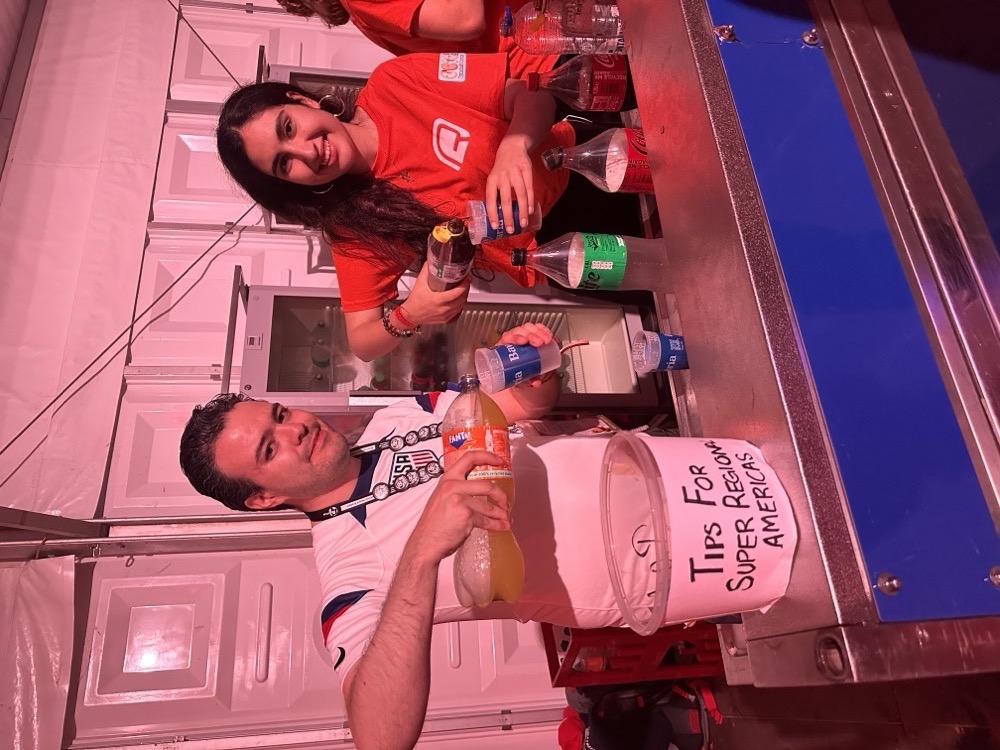
I started exactly where this begins. As a kid, I competed in RoboCupJunior Soccer with my team — Leones del CCC — in Graz, Austria. Since then I've held just about every role in the federation, all the way to my seat today as a RoboCup Trustee.
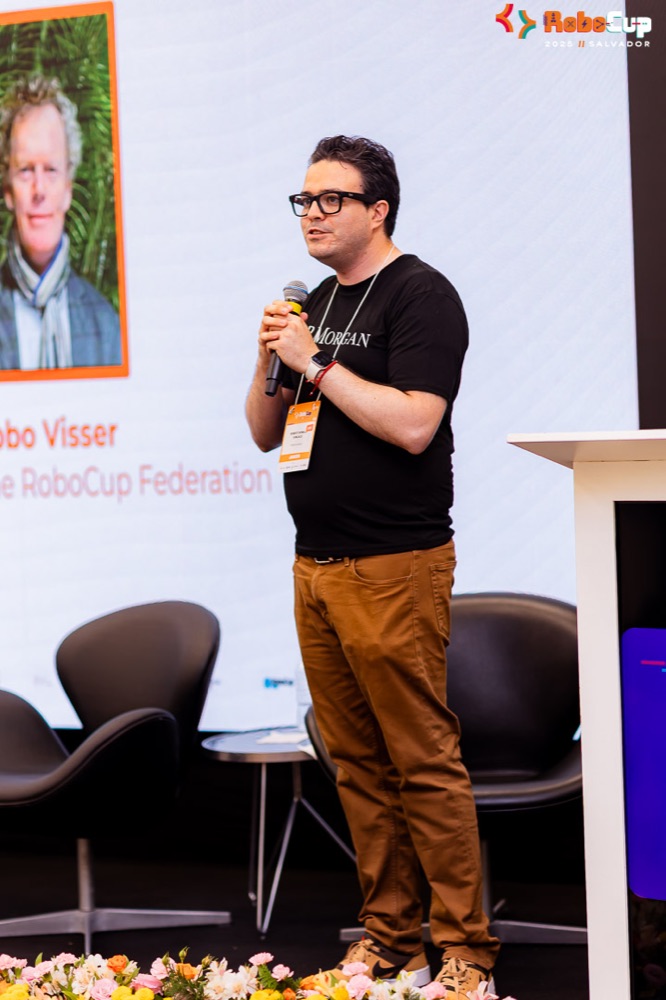
In 2025 the federation gave me its Outstanding Community Service Award, which recognizes a contribution that has changed the community.
But of all the hats I wear now, the one closest to me is representing RoboCupJunior — the entry level this whole community grows from.
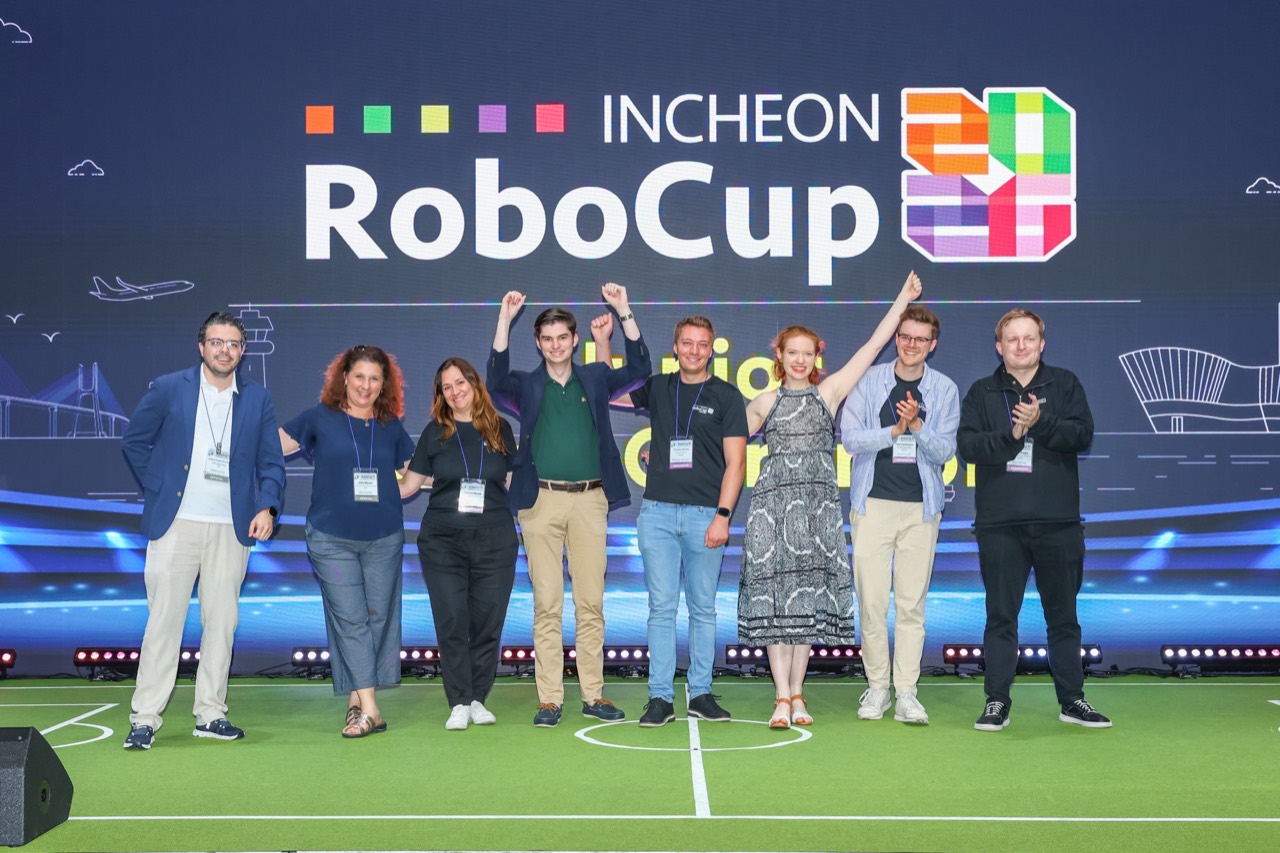
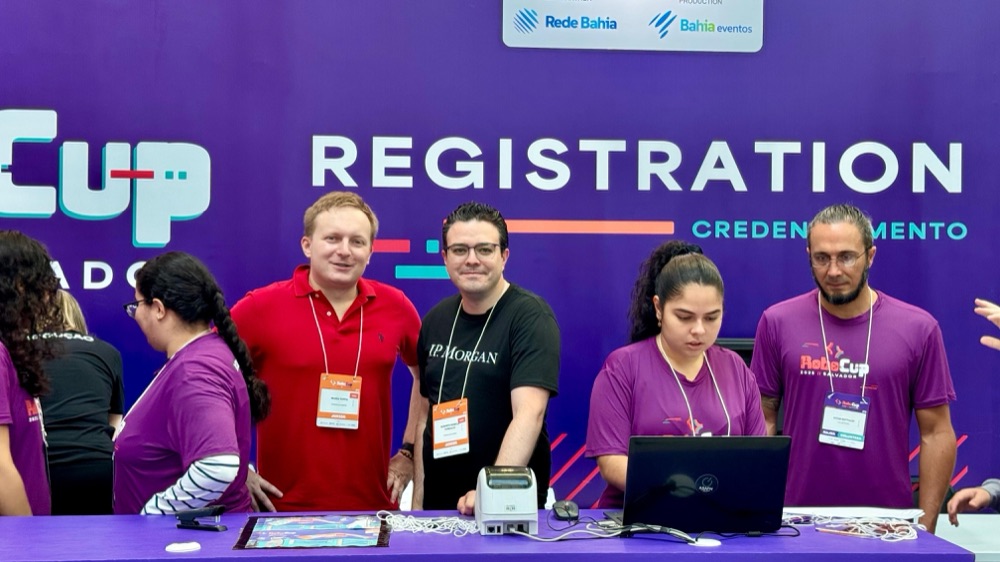
None of it happens alone — the RoboCupJunior Execs & Trustees I get to serve alongside.
The federation
The table I get to sit at.
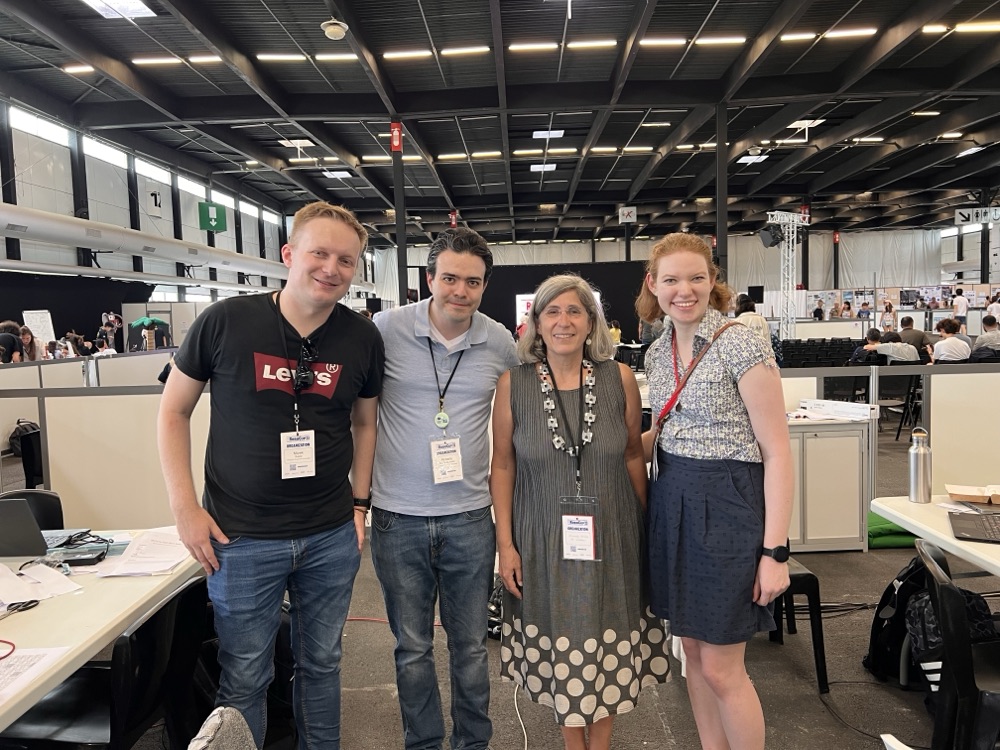
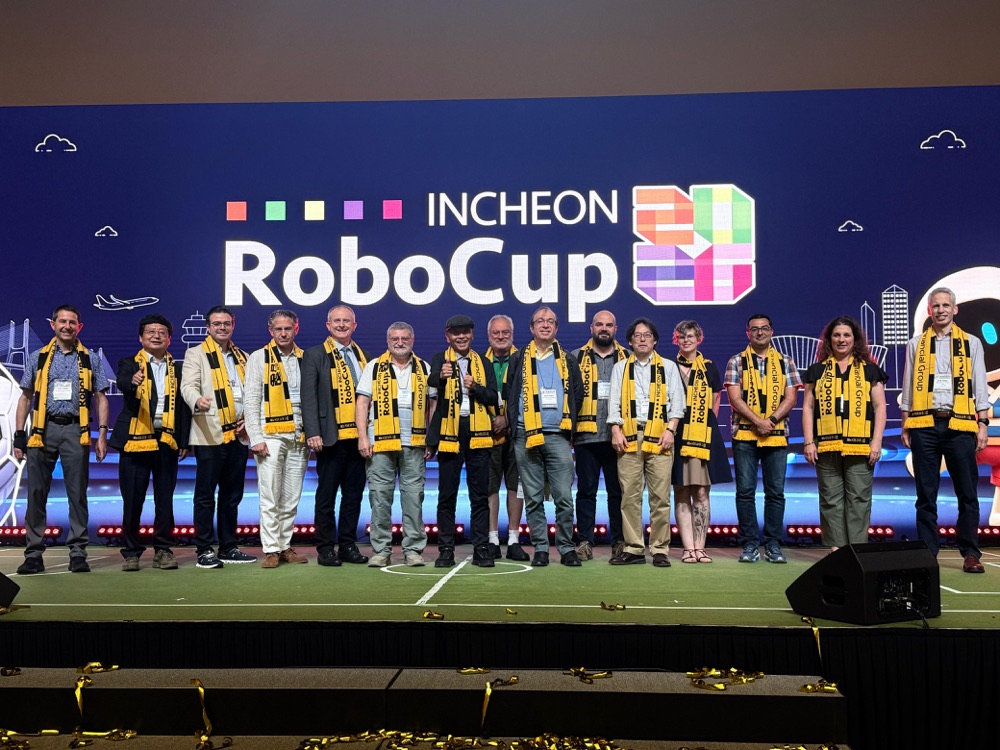
RoboCup is governed by an all-volunteer Board of Trustees — leading researchers and industry figures from five continents. These are the people I serve alongside.
🇺🇸Ubbo VisserUniversity of MiamiPresident
🇦🇺Claude SammutUNSW SydneyPast President
🇩🇪Maike Paetzel-PrüsmannJGU MainzVice President
🇧🇷Flavio TonidandelSocialdroids RoboticsVice President
🇸🇬Changjiu ZhouSingapore PolytechnicVice President
Now you know what RoboCup is. Come see it in person.
There's a team near you — or a reason to start one. The next World Championship is already being built by people who, not long ago, were exactly where you are right now: curious, and new.
 Humanoid Soccer League
Drives 2050
Humanoid Soccer League
Drives 2050